
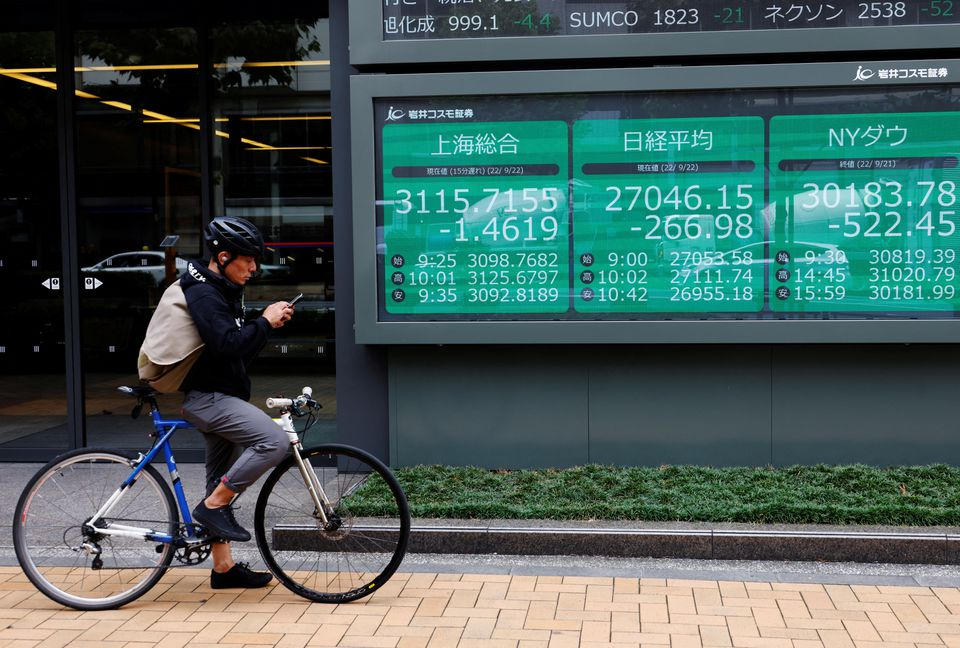
World shares sank to two-year lows on Wednesday, hammered by spiralling borrowing costs that intensified fears of a global recession and sent investors into the arms of the safe-haven dollar. Yields on U.S. 10-year Treasuries topped 4.0% for the first time since 2010 as markets wagered the Federal Reserve might have to take rates past 4.5% in its crusade against inflation. The pound came under fire again on the back of a renewed surge in UK bond yields that have driven the government’s borrowing costs above those with heavier debt burdens such as Greece or Italy.
The International Monetary Fund (IMF) and ratings agency Moody’s criticised Britain’s new economic strategy. Investors braced for more havoc in bond markets that has already forced the Bank of England to promise “significant” action Central banks around the world have jacked up interest rates in the last week and said they would do whatever it takes to fight red-hot inflation, particularly as the northern hemisphere winter risks exacerbating a global energy crunch. It is now clear that central banks in advanced economies will make the current tightening cycle the most aggressive in three decades,” said Jennifer McKeown, head of global economics at Capital Economics.
While this may be necessary to tame inflation, it will come at a significant economic cost. In short, we think the next year will look like a global recession, feel like a global recession, and maybe even quack like one, so that’s what we’re now calling it. The MSCI All-World index lost 0.65% to hit its lowest since November 2020. It’s heading for a 9% drop in September – set for its biggest monthly decline since March 2020’s 13% fall.