
WASHINGTON — The U.S. Senate approved a one-week extension of federal government funding, averting a partial government shutdown that was scheduled to begin Saturday.
The measure, which passed 71 to 19, gives lawmakers an additional week to negotiate and pass a comprehensive bill to fund federal agencies through the fiscal year, which ends Sept. 30.
The U.S. House passed its version of the one-week extension on Wednesday by a vote of 224-201, with nine Republicans crossing party lines to support the bill.
While that vote was technically bipartisan, only one returning Republican voted for it. The other eight GOP votes came from members who are leaving Congress at the end of the year, either retiring or because they lost reelection.
The Senate was under pressure Thursday to pass the bill without delay, and without objections from individual senators that could hold up a vote under the expedited procedure being used to pass the measure.
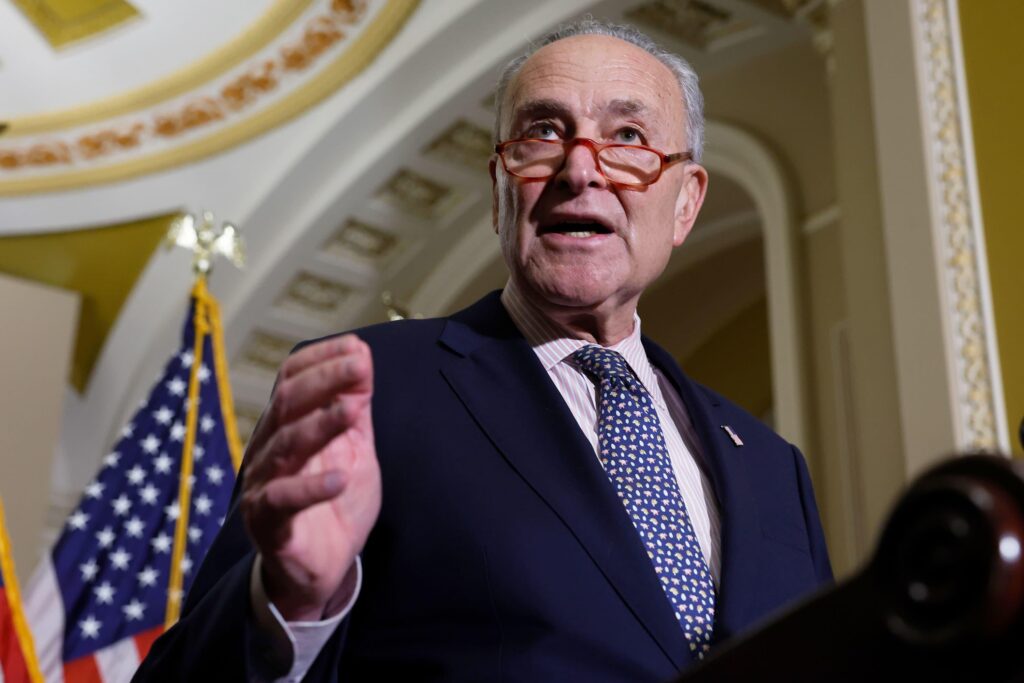
“We should move quickly to avert a shutdown today, without any unwelcome brouhaha that has caused shutdowns in years past,” Senate Majority Leader Chuck Schumer said on the Senate floor Thursday morning.
CNBC Politics Read more of CNBC’s politics coverage: Senate passes one-week government funding bill, averting a partial shutdown Trump vows ‘free speech’ reform of government, universities, media, tech firms if elected in 2024 Biden administration makes at-home Covid tests available for free again this winter U.S. slaps restrictions on Chinese chipmaker and other companies over national security worries Trump hits 7-year low in new national poll as Biden approval climbs Two Americans and five Russians charged with running a smuggling network to obtain military technology and ammunition for Russia Biden signs bill to protect same-sex and interracial marriages FTX committed ‘old fashioned embezzlement,’ CEO tells lawmakers in blistering hearing Congress considers crypto consumer protection bill that Sam Bankman-Fried backed before FTX collapse Biden celebrates easing inflation numbers, defends his economic policies Former FTX CEO Sam Bankman-Fried declines to testify before Senate or accept service of subpoena, committee says
Read more of CNBC’s politics coverage:
Senate passes one-week government funding bill, averting a partial shutdown Trump vows ‘free speech’ reform of government, universities, media, tech firms if elected in 2024 Biden administration makes at-home Covid tests available for free again this winter U.S. slaps restrictions on Chinese chipmaker and other companies over national security worries Trump hits 7-year low in new national poll as Biden approval climbs Two Americans and five Russians charged with running a smuggling network to obtain military technology and ammunition for Russia Biden signs bill to protect same-sex and interracial marriages FTX committed ‘old fashioned embezzlement,’ CEO tells lawmakers in blistering hearing Congress considers crypto consumer protection bill that Sam Bankman-Fried backed before FTX collapse Biden celebrates easing inflation numbers, defends his economic policies Former FTX CEO Sam Bankman-Fried declines to testify before Senate or accept service of subpoena, committee says
Schumer pledged that both sides would spend the rest of the day working to get the seven day “continuing resolution,” or CR, bill finished.
The Senate vote over the stopgap CR took place under the shadow of far more high-stakes negotiations currently underway over a massive omnibus spending bill that would fund all federal agencies through the end of fiscal year 2023 next September.
On Tuesday evening, the top appropriator in the House, Rep. Rosa DeLauro, D-Conn., and Sens. Patrick Leahy, D-Vt., and Richard Shelby, R-Ala., the top Republican and Democratic appropriators in the Senate, announced that they had reached a framework agreement to begin serious negotiations over an omnibus bill.
All three of them expressed optimism that an omnibus bill could be hammered out and passed before Congress leaves for Christmas, on Dec. 23.
Notably absent from the announcement, however, was the top Republican appropriator in the House, Rep. Kay Granger of Texas.
House Republicans have little incentive to help Democrats pass any spending bills before they take the majority on Jan. 3.
House Minority Leader Kevin McCarthy has publicly advocated for a series of CR bills that would fund the government only into January, allowing him and his new majority to tackle a broader spending bill when they have more leverage.